͏ ͏ ͏ ͏ ͏ ͏ ͏ ͏ ͏ ͏ ͏ ͏ ͏ ͏ ͏ ͏ ͏͏ ͏ ͏ ͏ ͏ ͏ ͏ ͏ ͏ ͏ ͏ ͏ ͏ ͏ ͏ ͏ ͏͏ ͏ ͏ ͏ ͏ ͏ ͏ ͏ ͏ ͏ ͏ ͏ ͏ ͏ ͏ ͏ ͏͏ ͏ ͏ ͏ ͏ ͏ ͏ ͏ ͏ ͏ ͏ ͏ ͏ ͏ ͏ ͏ ͏͏ ͏ ͏ ͏ ͏ ͏ ͏ ͏ ͏ ͏ ͏ ͏ ͏ ͏ ͏ ͏ ͏͏ ͏ ͏ ͏ ͏ ͏ ͏ ͏ ͏ ͏ ͏ ͏ ͏ ͏ ͏ ͏ ͏ ͏ ͏ ͏ ͏ ͏ ͏ ͏ ͏ |
|
|
| The Blue Zones problem A longevity story that may not hold up | 01 | | What’s new with the program Contests, milestones, and external uploads | 02 | | What we're reading Three longevity stories worth your time this month | 03 | | Longevity is contagious An easy way to pass it on | 04 | |
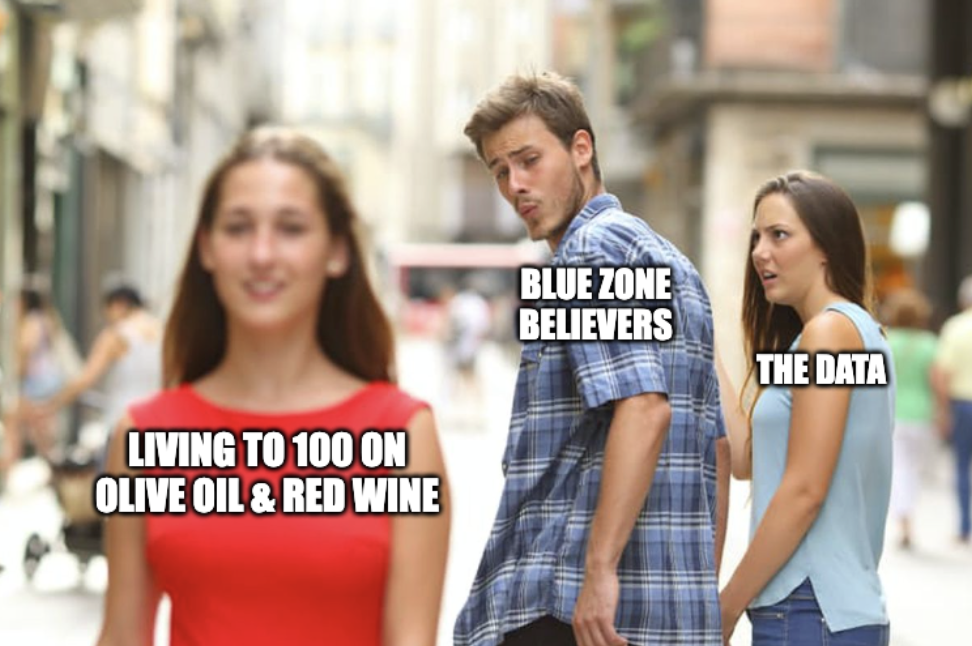
You may have heard of the so-called "Blue Zones": Five regions where people supposedly live much longer — Okinawa, Sardinia, Loma Linda, Ikaria, Nicoya. The Netflix doc made them famous. The activities, habits, and lifestyles of people in these regions became a kind of blueprint for longevity.
But the data behind them might be falling apart.
What happened: Demographer Saul Justin Newman (UCL) won a 2024 Ig Nobel for showing that regions in the blue zone with the most reported super-centenarians (110+) tend to share three things: bad birth records, high poverty, and pension fraud.
A few of his findings: - ~72% of of supposed centenarians in one region of Greece were dead, missing, or pension fraud cases.
- Ikaria has never produced a single verified super-centenarian.
- It turns out some of the claims about Blue Zone habits are simply false. For example, Okinawans eat fewer vegetables and have some of the highest BMIs in Japan.
It turns out that the secret to living to 110 may be less "eat more fish" and more "don't register your death”.
What behaviours are linked to longer lives? Plant-forward diets, regular movement, and strong social ties really do support longevity. None of that requires a Sardinian zip code — it shows up in research everywhere.
What doesn’t hold up under scrutiny? That any one region is uniquely responsible for longer lifespans or that the “Blue Zone formula” is as robust as it’s marketed to be. (Note: A December 2025 rebuttal from Sardinian researchers disputes parts of Newman’s critique — but the core issues still stand).
TLDR: Eat mostly plants. Move often. Stay socially connected. Those patterns are linked to longer lives. The Blue Zones map might not be — focus on the habits, not the geography.
→ Read more: Newman's research at UCL |
 | | The longevity lessons from these regions aren’t wrong — move, eat plants, stay connected to people you love. You don’t need a specific island to prove them. But you don’t need to be in a Blue Zone to see the benefits. | | Dr. Kelly Anderson | | Medical Director @ Felix | |
Note from our sponsor (that’s also us) |
We don’t usually interrupt your regularly scheduled longevity programming—but this one felt worth it.
We’re giving away a trip for two to Iceland worth $25,000 (yes, the Northern Lights, the whole thing). No biohacking required.
Register to enter—and if you spend $40+ in Shop, or refer a friend, you’ll get a bonus entry. |
| No purchase needed to register. Contest ends May 10, 2026 at 11:59 PM EST. Open to full-time residents of Alberta, British Columbia, Manitoba, Newfoundland and Labrador, Nova Scotia, Ontario, Prince Edward Island, and Saskatchewan who have reached the age of majority. See contest rules for details. | |
We've completed 75,000 Longevity tests for Felix patients – and we're just getting started. We're honoured that so many Canadians have chosen Felix to help them spot health risks, uncover their biological age and optimized their health. |
🩸 All your blood tests, one place |
Your Felix results are just one piece of the picture. Patients have been asking us to help store and track bloodwork from anywhere. Rumour has it that's coming soon. Watch this space. |
📚 Reading is a longevity intervention A new study in Neurology found that people who engage most in lifelong learning — reading, writing, language study — had a 38% lower risk of Alzheimer's and showed symptoms about five years later. Even more striking: autopsies showed their cognition held up despite significant brain pathology. Translation: your library card is doing more than you think. 🫁 VO2 max isn't just about your heart VO2 max is a diagnostic test that measures how well your body takes in and uses oxygen during exercise — and it's one of the best predictors of long-term health. New analysis shows that after middle age, nearly half of the drop in VO2 max has nothing to do with your heart — it's your muscles losing the ability to extract and use oxygen efficiently. The takeaway: pure cardio won't cut it. You need intensity and strength to keep the whole engine intact. ☕ Your coffee is pulling double duty A 43-year cohort study found that moderate caffeinated coffee or tea consumption was linked to an 18% lower dementia risk and better cognitive performance over time. Not a hall pass for a fifth espresso. But your morning habit has been quietly working on your brain for decades. |
 | Refer a friend → Get $50 value in points After their first completed assessment. | |
That's it for this month's Later.
Until next time — eat beans if you like them, walk to something, and stop comparing yourself to a Sardinian shepherd.
— Felix Longevity |
What did you think of this month’s brief? |
|
|
Communications from Felix Health Inc. and subsidiaries are not a substitute for medical advice, diagnosis, or treatment. If you have any medical questions or concerns, please talk to your healthcare practitioner. If you are experiencing a medical emergency, seek help immediately by going to your nearest emergency department or by calling 911. |
|
|
|