͏ ͏ ͏ ͏ ͏ ͏ ͏ ͏ ͏ ͏ ͏ ͏ ͏ ͏ ͏ ͏ ͏͏ ͏ ͏ ͏ ͏ ͏ ͏ ͏ ͏ ͏ ͏ ͏ ͏ ͏ ͏ ͏ ͏͏ ͏ ͏ ͏ ͏ ͏ ͏ ͏ ͏ ͏ ͏ ͏ ͏ ͏ ͏ ͏ ͏͏ ͏ ͏ ͏ ͏ ͏ ͏ ͏ ͏ ͏ ͏ ͏ ͏ ͏ ͏ ͏ ͏͏ ͏ ͏ ͏ ͏ ͏ ͏ ͏ ͏ ͏ ͏ ͏ ͏ ͏ ͏ ͏ ͏͏ ͏ ͏ ͏ ͏ ͏ ͏ ͏ ͏ ͏ ͏ ͏ ͏ ͏ ͏ ͏ ͏ ͏ ͏ ͏ ͏ ͏ ͏ ͏ ͏ |
|
|
| It's back! Why creatine is suddenly everywhere again | 01 | | What’s new with the program Free bloodwork visualizer, BC home collection | 02 | | What we're reading Three longevity stories worth your time this month | 03 | | Longevity is contagious Pass it on and earn rewards | 04 | |
Boring, cheap, and quietly winning |
We're talking about creatine.
The supplement aisle is loud right now. Each one arrives with a podcast tour and a flood of TikToks. Meanwhile, the cheapest, most boring supplement in the aisle, on shelves since the mid-1990s, is quietly having its biggest year in decades.
What is creatine
Creatine is a molecule your body makes naturally and that you also get from food, mostly meat and fish. About 95% of it is stored in muscle, where it helps regenerate ATP, the molecule used to store energy. About 5% of it is stored in the brain and organs, while the rest is stored in muscle, where higher creatine levels mean your cells can recycle energy faster during short bursts of high demand, like intense physical activity.
For thirty years, creatine was treated as a sports supplement. Take 5 grams a day while you're lifting weights and you might gain muscle a little faster. The search supporting this practice is among the most replicated in nutrition science.
So what changed?
The second act
A 2026 systematic review in Nutrition Reviews looked at creatine supplementation in adults over 55 and found a consistent association with improvements in cognition, particularly memory and processing speed. A separate 2026 narrative review in the Journal of the International Society of Sports Nutrition examined creatine's role in healthy aging and concluded it helps preserves muscle mass, bone density, and brain function in older adults
Researchers have also begun studying creatine as a potential treatment for mild Alzheimer’s disease. The evidence is still early, but the idea is straightforward: the aging brain appears to become less efficient at producing energy, and creatine helps support cellular energy production.
Creatine isn’t a miracle cure for cognitive decline, and the new research isn’t claiming it is. But it’s remarkable that after three decades of research and thousands of studies, scientists are still uncovering new potential benefits—including for brain health.
Why it took thirty years
Creatine had an image problem. Because it became so closely associated with bodybuilding and sports performance, most of the research naturally focused on young athletes rather than older adults. The few studies that did examine aging were typically small and underpowered, making it difficult to draw firm conclusions. Only in the past few years—driven by larger trials, better methods, and a growing interest in healthy aging—has the evidence begun to accumulate.
There was also little commercial incentive to push the field forward. Creatine monohydrate isn’t patented, so no company stands to make billions by proving a new benefit. That means fewer blockbuster clinical trials, less marketing, and far less public attention than a patented drug would receive.
In retrospect, it’s a reminder that scientific progress doesn’t simply follow the most important questions—it often follows incentives. For decades, the incentives around creatine pointed toward sports performance. Only recently have they shifted toward healthy aging.
The Felix view
Creatine monohydrate is one of the few supplements that clears our clinical bar: consistent evidence, a plausible biological mechanism, and an excellent long-term safety record.
For most adults, the recommendation is simple: 3–5 grams of creatine monohydrate per day. No loading phase. No cycling. No premium formulations. The plain generic powder is the version that has been studied the most—and the one we recommend.
The broader lesson isn’t really about creatine. It’s about how longevity science works. We often assume that newer means better, but that’s rarely true. Sometimes the most important discoveries come from looking at familiar interventions through a different lens.
TLDR: After thirty years of research, creatine has evolved from a sports supplement into one of the strongest evidence-backed supplements for healthy aging. The benefits are modest but real, the safety record is excellent, and 3–5 g/day of plain creatine monohydrate is all you need.
→ Read more: Creatine and cognition in aging (Nutrition Reviews, 2026) |
 | | Good medicine doesn’t reward novelty or marketing. It rewards interventions that are effective, safe, and simple enough for people to sustain. | | Dr. Kelly Anderson | | Chief Medical Director @ Felix | |
🧬 Store, understand, and track your blood work. For free. |
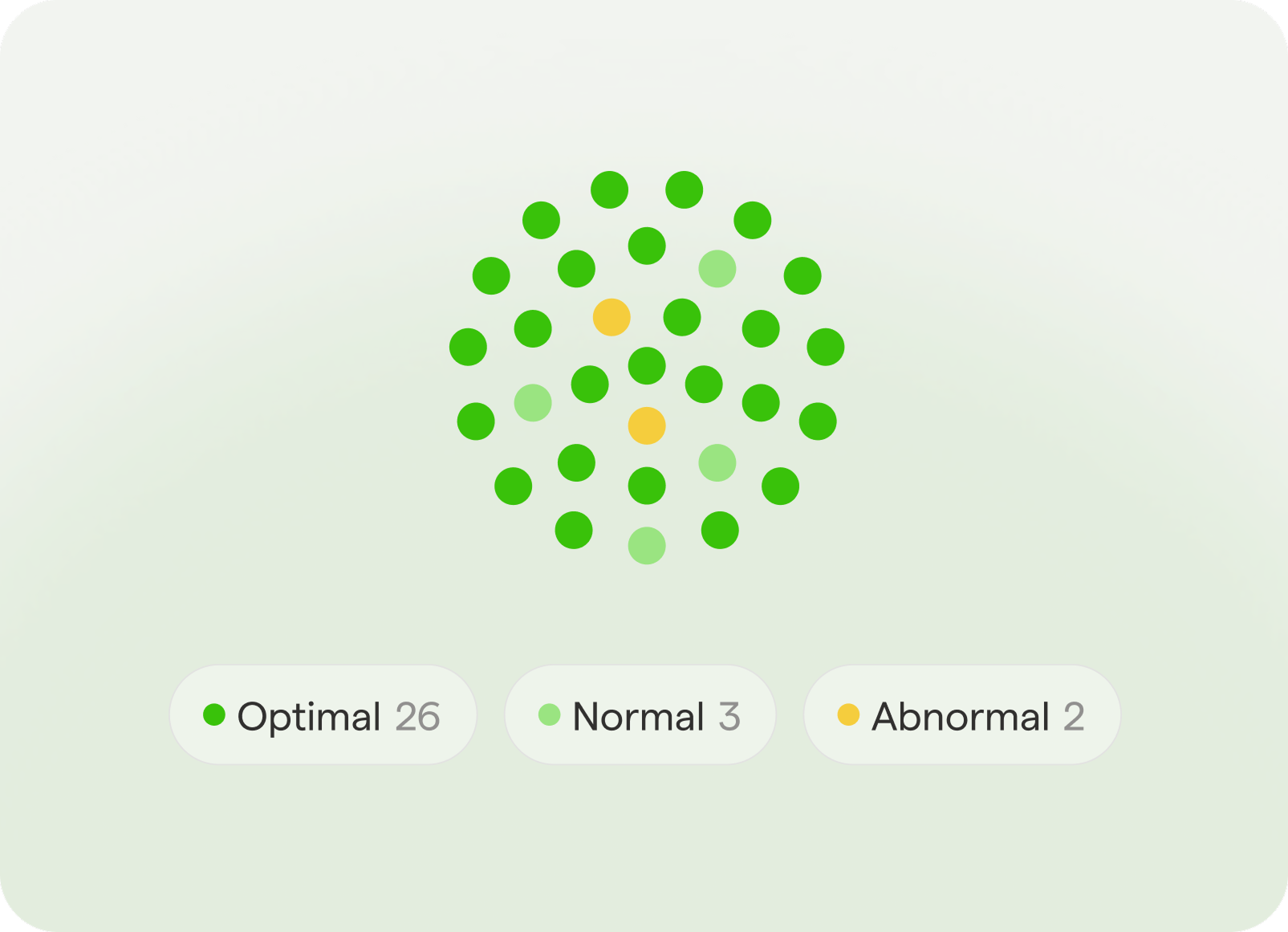
No program, no fee, no appointment. Upload any blood test from any lab, and Felix will extract your results, explain them in plain language, and flag what's out of range. No more feeding your labs into the abyss of ChatGPT. A free analysis is now available to everyone in Canada. Learn more here. |
Lab result interpretations are AI-generated, are not reviewed by a healthcare professional, and are for informational purposes only. They do not constitute medical advice, diagnosis, or treatment. Always consult a qualified healthcare provider about your results. |
🏡 BC, your bloodwork comes to you |
Now live: Home blood collection is now available for Longevity patients in British Columbia, joining Ontario. Book a home collection appointment, and a technician will come to your home or office to draw your blood. Same service we've offered in Ontario, now extended west. |
🦷 Your mouth is talking to your brain A 2025 study in Neurology found that periodontal disease was independently associated with white matter damage, a marker of cognitive decline. The leading explanation is chronic inflammation. The prescription is refreshingly simple: brush, floss, and see your dentist. 🚶 The walking pace question, settled A 2025 cohort study following more than 420,000 adults found that brisk walking pace, independent of total activity levels, was associated with a meaningfully lower risk of cardiac arrhythmias. The takeaway isn't that 10,000 steps is the wrong goal, but that pace appears to matter just as much. Walking faster is likely both a marker of better cardiovascular fitness and a way to improve it, making speed, not just volume, a worthwhile target. 🧬 The biological age test you don't need yet Consumer saliva-based biological age tests have exploded in popularity. The idea is simple: mail in a saliva sample, and an algorithm estimates your biological age by analyzing patterns of DNA methylation—chemical tags that change as we age. It's an intriguing concept, but the evidence supporting today's consumer tests is still limited. Repeat tests can vary by several years, and it's still unclear how well saliva reflects aging throughout the rest of the body. Our view: the biology is compelling, but the consumer products haven't caught up yet. |
 | Refer a friend → Get $50 value in points After their first completed assessment. | |
That's it for this month's Later.
Until next time: lift something, eat the plants, get the sleep, see your friends. And maybe add a scoop of creatine.
— Felix Longevity |
What did you think of this month’s brief? |
|
|
Communications from Felix Health Inc. and subsidiaries are not a substitute for medical advice, diagnosis, or treatment. If you have any medical questions or concerns, please talk to your healthcare practitioner. If you are experiencing a medical emergency, seek help immediately by going to your nearest emergency department or by calling 911. |
|
|
|