͏ ͏ ͏ ͏ ͏ ͏ ͏ ͏ ͏ ͏ ͏ ͏ ͏ ͏ ͏ ͏ ͏͏ ͏ ͏ ͏ ͏ ͏ ͏ ͏ ͏ ͏ ͏ ͏ ͏ ͏ ͏ ͏ ͏͏ ͏ ͏ ͏ ͏ ͏ ͏ ͏ ͏ ͏ ͏ ͏ ͏ ͏ ͏ ͏ ͏͏ ͏ ͏ ͏ ͏ ͏ ͏ ͏ ͏ ͏ ͏ ͏ ͏ ͏ ͏ ͏ ͏͏ ͏ ͏ ͏ ͏ ͏ ͏ ͏ ͏ ͏ ͏ ͏ ͏ ͏ ͏ ͏ ͏͏ ͏ ͏ ͏ ͏ ͏ ͏ ͏ ͏ ͏ ͏ ͏ ͏ ͏ ͏ ͏ ͏ ͏ ͏ ͏ ͏ ͏ ͏ ͏ ͏ |
|
|
| The tests you don't need Why more biomarkers doesn't mean more years | 01 | | What’s new with the program Bloodwork uploads, a smarter results filter | 02 | | What we're reading Three longevity stories worth your time this month | 03 | | Longevity is contagious ass it on and earn rewards | 04 | |
🩻 The tests you don't need |
Britney Spears said “Gimme More”. The loudest advice in longevity right now is measure more. More markers, more panels, more data. The pitch is that more biomarkers equals more years.
The science, however, doesn't support that.
Diagnostic tests can and do yield insight. But more tests do not necessarily yield more insight. There's a point of diminishing returns - and even worse, a point where more tests can actually cause harm.
Here's the math the marketing pages skip.
The case for "less is more"
Lab tests are typically interpreted using a “reference range” (sometimes called a “normal range”). This is the range of values seen in approximately 95% of healthy people.
Importantly, that means about 5% of healthy people will still fall outside the reference range on any given test — purely due to normal biological variation, timing, hydration, exercise, sleep, or random chance.
In other words, an “abnormal” result does not necessarily mean something is wrong. As the number of tests increases, so does the probability of seeing at least one out-of-range result in an otherwise healthy person.
A 2022 editorial in the Scandinavian Journal of Primary Health Care highlighted the statistical consequences of broad lab screening:
- Testing 13 independent markers gives a roughly 50% chance that a perfectly healthy person will have at least one result flagged as out-of-range.
- At 25 markers, the probability rises to ~72%.
- At 40 markers, it rises further to ~87%.
- At 120 markers, there is a ~99.8% chance of at least one out-of-range result — even in someone with no underlying health issue.
Translation: run a perfectly healthy person through a 120-marker panel and there’s an overwhelming chance that something will be flagged — even if nothing is actually wrong.
Sometimes those findings are meaningful. But often they reflect normal biological variation rather than a genuine medical issue. The challenge is that once something is flagged, it can trigger cascades of follow-up testing, supplements, referrals, second opinions, cost, and anxiety.
This is why Felix is ruthlessly particular about which biomarkers go into our Longevity test, and which ones don't.
Nearly three out of four U.S. physicians say unnecessary testing is a serious problem for the health care system (ABIM Foundation). The downstream cost (patient anxiety, unnecessary follow-ups, occasional harm from procedures that turn out to be nothing) rarely shows up on a marketing page.
How Felix decides what to test
So if “more markers” doesn’t automatically mean “more insight,” what actually belongs on a longevity panel?
Our view is that every biomarker should clear a high bar. At Felix Longevity, each marker has to meet three criteria: - Strong evidence linking it to long-term health outcomes,
- Clear intervention if the result is abnormal,
- Meaningful signal about future health — not just a snapshot of your current state.
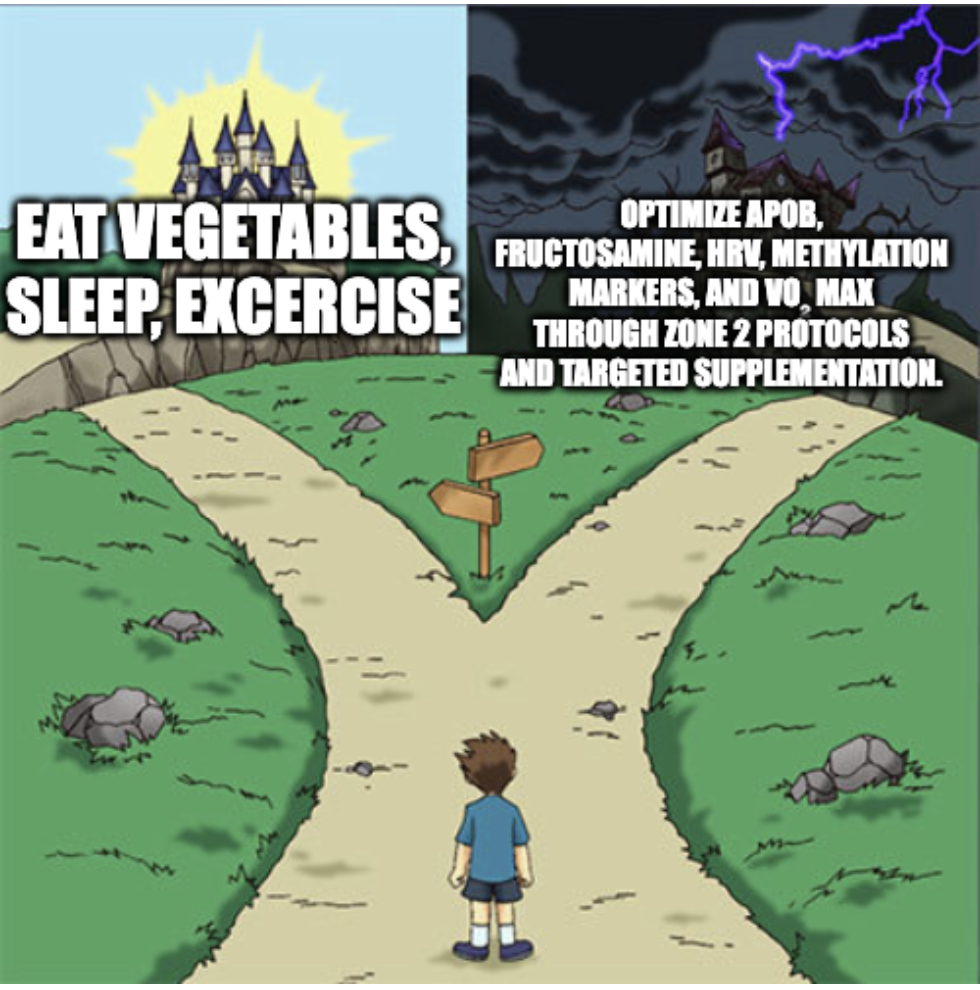
That standard leaves a lot of trendy biomarkers off the panel: fructosamine, adiponectin, atherogenic coefficient, and many others. Adding them would make the panel longer. It wouldn’t necessarily make it more useful. We’ve been deliberately selective about this. The full list of biomarkers we chose not to include — and the reasoning behind each decision — lives on our methodology page.
It’s a quieter pitch than “120 markers in a box.” We think it’s the more credible on
TLDR: Regular testing is valuable. The right tests are what matter. The size of the panel is not the point.
→ Read more: Blood tests – too much of a good thing (Scandinavian Journal of Primary Health Care) |
 | | There is a rule in medicine: don't order a test unless it will change your management of a condition. We've thought about this carefully in every aspect of our longevity program. A number on a chart isn't insight. The plan that comes from it is. | | Dr. Kelly Anderson | | Chief Medical Director @ Felix | |
Note from our sponsor (that’s also us) |
Health is wealth. Felix and Wealthsimple have teamed up to give Wealthsimple clients preferred access to Felix Longevity — our comprehensive longevity blood test and health assessment. Depending on your Wealthsimple tier, you'll receive: - Wealthsimple Core clients ($1+ in assets) Free first Felix visit, plus 10% off Felix Longevity — $270
- Wealthsimple Premium clients ($100k+) Everything in Core, plus 25% off Felix Longevity — $225
- Wealthsimple Generation clients ($500k+) Everything above, plus Felix Longevity for $99
Felix Longevity includes 35+ biomarkers, biological age analysis, and a personalized practitioner-reviewed health report designed to help you better understand your long-term health. Already with Wealthsimple? Log in to claim your perks. Not yet a client? This might be a decent excuse to open an account. |
🏠 All your bloodwork, one home |
Coming soon: Upload bloodwork from any clinic or lab directly to your Felix account. We’ll store it, explain it, and track your biomarkers over time — so you can see your health story in one place.
No more digging through PDFs or feeding lab results into the abyss of ChatGPT. |
👀 Your biomarkers, organized |
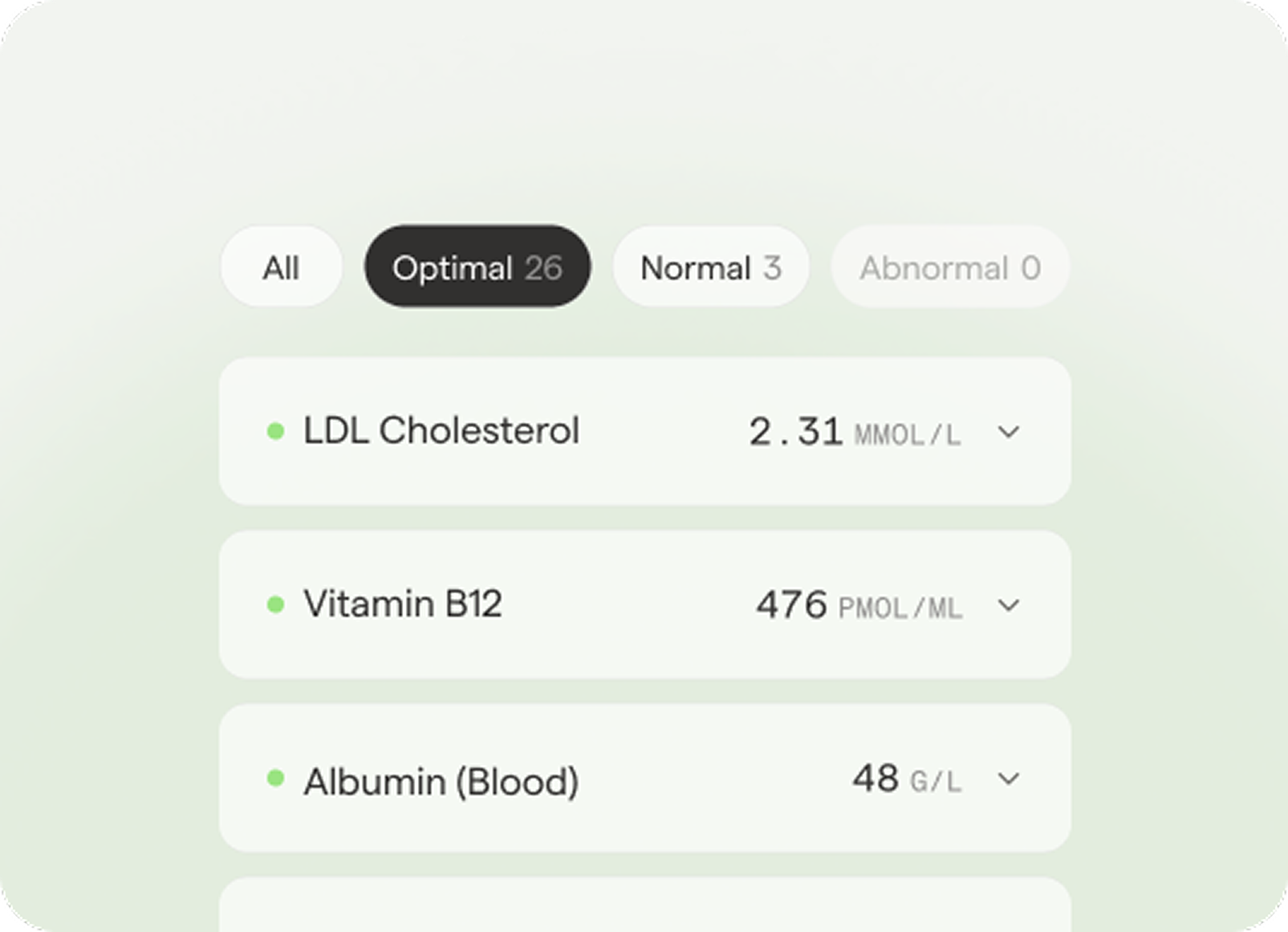
Your biomarker summary now filters results by Abnormal, Optimal, and Normal — making it easier to see what needs attention, what’s improving, and what’s already in a good place.
Less scrolling. More signal. |
💪 If you lift, you live (longer) Strength training is one of the most consistently underrated longevity interventions. A large meta-analysis found that resistance training was linked to a 15% lower risk of early death. The sweet spot landed around 60 minutes a week (yes, a week), where the risk reduction peaked at 27%. Past that, the curve flattened. You don't need to live in the gym. You just need to lift something. 🚶 7,000 is the new 10,000 A meta-analysis of more than 160,000 adults found that walking around 7,000 steps a day was linked to roughly 47% lower risk of all-cause mortality compared to 2,000. The benefits flatten after that. 10,000 is great. 7,000 gets you most of the way there. A new analysis found adults eating at least 25g of fibre per day had meaningfully lower rates of cardiovascular disease, type 2 diabetes, and colon cancer. The average Canadian eats about 15g. Beans, lentils, oats, berries, and broccoli are the boring, cheap, unbeatable answer. |
 | Refer a friend → Get $50 value in points After their first completed assessment. | |
That's it for this month's Later.
Until next time: eat plants, move, sleep, see your friends. And try not to overthink it.
— Felix Longevity |
What did you think of this month’s brief? |
|
|
Communications from Felix Health Inc. and subsidiaries are not a substitute for medical advice, diagnosis, or treatment. If you have any medical questions or concerns, please talk to your healthcare practitioner. If you are experiencing a medical emergency, seek help immediately by going to your nearest emergency department or by calling 911. |
|
|
|